Updated Thursday, October 8, 2026
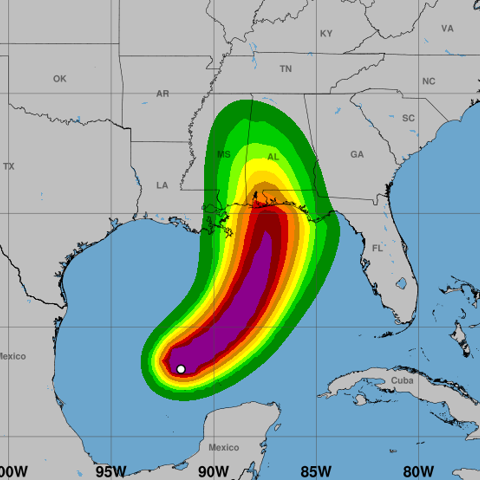
Hurricane Isaias, the first hurricane of the 2026 Atlantic season, is barreling across the Gulf toward the northern Gulf Coast, where it is expected to make landfall late Friday or early Saturday. Hurricane conditions could reach the Florida Panhandle as early as Friday afternoon, putting coastal communities from Pensacola to Panama City Beach on alert.
The storm strengthened rapidly this week, jumping from 40 mph to 80 mph sustained winds in just 24 hours, according to The Weather Channel. Forecasters expect Isaias to reach at least Category 2 strength over warm Gulf waters before coming ashore as a Category 1 or Category 2 hurricane.
A hurricane warning is in effect from Ocean Springs, Mississippi, to the Bay/Gulf County line in Florida. A storm surge warning stretches from the mouth of the Mississippi River to Steinhatchee, Florida, and Governor-declared emergency orders are in place for 25 Florida counties.
For homeowners and business owners in Northwest Florida and the Big Bend, the next 24 hours are about safety. The weeks that follow will focus on recovery and, for many, a complicated insurance claim.
Hurricane Isaias at a glance
• Current strength: 80 mph sustained winds as of Thursday morning
• Expected landfall: Northern Gulf Coast, Friday night into early Saturday
• Expected intensity at landfall: Category 1 or Category 2
• Florida areas at highest risk: Pensacola, Navarre, Fort Walton Beach, Destin, Panama City Beach and the Big Bend coast
• Main threats: Storm surge, damaging winds, up to 10 inches of rain locally, and isolated tornadoes
Where is Hurricane Isaias and when will it hit Florida?
Isaias is in the central Gulf and expected to turn north toward the coast, making landfall somewhere between southeast Louisiana and the Florida Panhandle late Friday or early Saturday. As of Thursday morning, it sat just under 400 miles south-southwest of New Orleans, moving east-northeast at 8 mph.
Gulf water temperatures in the 80s fueled a rapid jump in strength this week. Forecasters expect Isaias to reach at least Category 2 strength over the central Gulf before increasing wind shear knocks it down slightly near landfall. A small drop in wind speed will do little to reduce the storm's surge, rain and flood impacts.
Current watches and warnings in Florida
• Hurricane warning: Florida Panhandle west of the Bay/Gulf County line, including Escambia, Santa Rosa, Okaloosa, Walton and Bay counties
• Storm surge warning: Florida coast to Steinhatchee, with a storm surge watch extending south to Yankeetown
• Tropical storm warning: East of the Bay/Gulf County line to the Aucilla River
Timeline for Florida
• Friday midday and afternoon: Strong winds and heavy rain begin along the Panhandle. Outer rainbands may produce tornadoes.
• Friday night into Saturday: Landfall and peak surge, wind and rain near and east of the center.
• Saturday: Isaias weakens inland, but heavy rain and gusty winds reach Tallahassee and parts of central Florida, including Orlando.
• Sunday: Remnants move north, with rain spreading across the Southeast and mid-Atlantic.
Track and timing can still shift. Follow the National Hurricane Center and your county emergency management office for evacuation orders.
What damage could Hurricane Isaias cause to Florida homes and businesses?
The worst impacts will occur along and east of the storm's center, putting the Florida Panhandle squarely in the path of surge, wind, and flooding. Each threat damages property differently, and insurance handles each one differently.
• Storm surge: Gulf water pushed ashore can flood normally dry ground, especially if peak surge arrives at high tide. Surge damage is typically covered by flood insurance (NFIP or private flood), not a standard homeowners policy.
• Wind: Damaging winds can tear off shingles, break windows, peel back metal roofing, and drop trees on structures. Downed power lines may cause outages lasting hours or days. Wind damage generally falls under your homeowners or commercial property policy, subject to a separate hurricane deductible.
• Rain and flooding: Most of the Gulf Coast is forecast to see 3 to 7 inches of rain, with up to 10 inches locally. Wind-driven rain through a damaged roof or window is often a covered wind loss, while rising floodwater usually is not.
• Tornadoes: Outer rainbands can spin up brief tornadoes Friday and again Saturday, causing concentrated structural damage far from the coast.
That split between wind and water is what makes many Florida hurricane claims complicated. When a property suffers both, the insurer has to decide which damage came from which cause, and that decision directly affects how much you are paid.
How to protect your property and your insurance claim
The steps you take before and right after Isaias can protect both your safety and the value of your claim. Life safety always comes first: if officials order an evacuation, leave.
Before the storm (finish by Friday morning)
1. Record your property's condition. Walk through every room, plus the roofline, exterior walls, fences, outbuildings, and landscaping, filming as you go. Date-stamped video is the strongest proof of pre-storm condition.
2. Gather your policies. Save digital copies of your homeowners, commercial, flood, and business interruption policies, including the declarations pages, somewhere you can access them from your phone.
3. Know your deductibles. Florida policies usually carry a separate hurricane deductible, often 2% to 5% of the dwelling coverage amount rather than a flat dollar figure.
4. Secure what you can. Install shutters, bring in outdoor furniture, move valuables and documents to higher ground, and photograph equipment and inventory at commercial sites.
After the storm
1. Wait for the all-clear. Avoid downed lines, standing water, and damaged structures.
2. Document everything before cleanup. Photograph and video all damage, inside and out, before moving or discarding anything.
3. Prevent further damage. Tarp roofs, board windows, and remove standing water. Keep every receipt; reasonable mitigation costs are typically reimbursable, and failing to mitigate can reduce your payout.
4. Report the claim promptly. Under current Florida law, you must generally give notice of a property claim within one year of the date of loss, but reporting early protects you and your place in line.
5. Do not sign anything you do not understand. Be cautious with assignment of benefits forms, quick settlement offers, and "final" releases in the first days after a storm.
Why hurricane insurance claims are harder than they look
Once the wind dies down, most property owners discover that the storm was only the first challenge. A hurricane claim is a negotiation, and the other side writes the rules, employs the adjuster, and controls the checkbook.
After a major storm, insurers are flooded with thousands of claims at once. Company adjusters, many of them temporary catastrophe staff brought in from out of state, may carry heavy caseloads and spend limited time at each property.
Common problems include:
• Wind vs. water disputes: The insurer attributes damage to an excluded cause, such as flood, instead of covered wind.
• Missed or hidden damage: Moisture inside walls, compromised roof decking, damaged HVAC systems, and mold that appears weeks later.
• Low pricing: Estimates that use outdated or below-market labor and material costs in a post-storm market where both are in short supply.
• Policy complexity: Overlapping coverages for dwelling, contents, additional living expenses, ordinance or law upgrades, and business interruption that go unclaimed simply because the policyholder did not know to ask.
• Delays and denials: Requests for more documentation, repeat inspections, and partial denials that stretch recovery out for months.
This is where a licensed public adjuster comes in.
What is a public adjuster?
A public adjuster is a state-licensed insurance professional who represents the policyholder, not the insurance company, in a property damage claim. In Florida, the Department of Financial Services licenses public adjusters, and they owe their clients a duty of loyalty under Florida Statute 626.854.
Your insurance company has its own adjusters, estimators, and attorneys working to resolve your claim on its terms. A public adjuster puts the same level of expertise on your side of the table.
What a public adjuster does during a hurricane claim
1. Reviews your policy to identify every coverage that applies, including ones policyholders commonly overlook, such as ordinance or law, debris removal, additional living expenses, and business interruption.
2. Inspects and documents the damage with photos, moisture readings, drone imagery, and expert reports, building a record that holds up to insurer scrutiny.
3. Prepares a detailed claim estimate using current, local repair pricing for every line item of damage.
4. Handles the paperwork and deadlines, including the proof of loss, inventories, and responses to insurer requests.
5. Negotiates the settlement directly with the insurance company, pushing back on lowball estimates, causation disputes, and denials.
6. Keeps you informed so you can focus on your family, your business, and getting back to normal.
Public adjusters handle residential, condominium, multifamily, commercial, and industrial claims. For businesses, the business interruption portion of a hurricane claim, which requires forensic accounting to calculate lost income, is often the largest and most contested part.
Public adjuster vs. insurance company adjuster: what's the difference?
The key difference is who they work for. An insurance company adjuster, whether staff or independent, is hired and paid by the insurer. A public adjuster is hired and paid by you.
• Who they represent: A public adjuster represents you, the policyholder. A company adjuster represents the insurance company.
• Who pays them: You pay a public adjuster through a contingency fee on the settlement. The insurer pays its own adjuster.
• Their goal: A public adjuster pursues a full, fair settlement under your policy. A company adjuster resolves the claim under the insurer's guidelines.
• Time on your claim: A public adjuster stays focused on your loss from inspection to payment. A company adjuster is often juggling a large post-storm caseload.
• Negotiation: A public adjuster negotiates with the insurer on your behalf. A company adjuster does not.
A public adjuster is also different from a contractor or a mitigation company. Contractors repair damage and mitigation companies dry out and stabilize property, but in Florida only a licensed public adjuster (or an attorney) can legally negotiate a claim on your behalf.
When should you hire a public adjuster after Hurricane Isaias?
The best time to bring in a public adjuster is early, before the insurer's inspection and before you accept any settlement. Early involvement means the damage is documented properly from day one and the claim is presented on your terms. That said, a public adjuster can also step in on claims that are already open, underpaid, or denied.
Consider a public adjuster if:
• Your property has significant roof, structural, water, or interior damage
• You own a commercial property or business with operations interrupted by the storm
• You have damage from both wind and water and expect a causation dispute
• Your insurer's estimate seems low or leaves out damage you can see
• You do not have the time or expertise to manage a complex claim while rebuilding
Florida public adjuster rules that protect you:
Florida closely regulates public adjusters (Fla. Stat. 626.854). Key protections include:
• Fee caps: For claims made within one year of a Governor-declared state of emergency, like Isaias, a public adjuster's fee cannot exceed 10% of the claim payment. Other claims are capped at 20%.
• Right to cancel: You can cancel a public adjuster contract without penalty within 10 days of signing.
• Written contracts: A public adjuster must have a signed written contract before charging any fee.
• Licensing: Always ask for a Florida public adjuster license number and verify it with the Florida Department of Financial Services.
Hurricane Isaias insurance claim FAQ
When will Hurricane Isaias make landfall in Florida? Isaias is forecast to make landfall on the northern Gulf Coast late Friday, October 9, or early Saturday, October 10, 2026. Hurricane conditions may reach the Florida Panhandle Friday afternoon.
What parts of Florida are under a hurricane warning for Isaias? The hurricane warning covers the Florida Panhandle west of the Bay/Gulf County line, including Pensacola, Fort Walton Beach, Destin, and Panama City Beach.
Does homeowners insurance cover hurricane damage in Florida? Most Florida homeowners policies cover wind damage from a hurricane, subject to a separate hurricane deductible. Flooding and storm surge are usually excluded and require a separate flood insurance policy.
How long do I have to file a hurricane claim in Florida? Under current Florida law, you generally must give your insurer notice of a property claim within one year of the date of loss. We strongly recommend reporting as soon as it is safe.
What does a public adjuster do? A public adjuster is a licensed professional who represents policyholders, not insurers. They review your policy, document and value your damage, prepare the claim, and negotiate the settlement with your insurance company.
How much does a public adjuster cost in Florida? Public adjusters work on contingency, so you pay nothing upfront. For claims filed within one year of a declared state of emergency, Florida law caps the fee at 10% of the claim payment.
Can I hire a public adjuster if I already filed my claim? Yes. A public adjuster can take over an open claim, review a settlement offer, or reopen an underpaid claim, as long as the claim is within the deadlines set by your policy and Florida law.
Do public adjusters handle commercial and business interruption claims? Yes. Experienced public adjusting firms handle commercial property, multifamily, industrial, and business interruption claims, often working with forensic accountants to document lost income.
Sill Public Adjusters is on the ground in Florida for Hurricane Isaias
Sill Public Adjusters' disaster response team is deploying to Florida to help homeowners, business owners, and property managers recover from Hurricane Isaias. Our licensed public adjusters will be on site in the Panhandle and Big Bend as soon as it is safe, ready to inspect damage, review your policy, and take the burden of the claim off your shoulders.
Since 1928, Sill has represented property owners, never insurance companies, on some of the largest catastrophe claims in North America. As part of Sill Adjusting Group, an international public adjusting organization serving the US and Canada, we bring the resources to handle claims of every size, from a single-family home to a multi-building commercial portfolio.
When you work with Sill, you get:
• A licensed public adjuster who works only for you
• A complete review of your policy and every coverage you are owed
• Thorough damage documentation and professional estimates
• Expert handling of commercial and business interruption claims
• Skilled negotiation with your insurance company from start to finish
• No upfront cost: we are paid only when you are
Get a free hurricane claim review today
Do not settle for less than your policy promises. Whether your property is damaged, your claim is already open, or your insurer's offer feels too low, talk to a Sill public adjuster before you sign anything.
Call 844-650-7455; our team is available 24/7 to request your free claim review.
Sill Public Adjusters. Florida license # W851402. Stay safe, follow local emergency orders, and contact us once it is safe to assess your property.